Finding Jonjon
TL;DR
What happens when a five-year-old meets someone who is forgetting who he is? We built a lighthouse to find out. Inside lived Uncle Jonjon, its keeper, who was losing his memories. Every mystery the children cracked brought one back, along with a real lightbulb. There was no lesson on dementia. Just a room, a person who needed them, and a group of children who worked out that forgetting doesn't make you any less worth remembering.
For Years 1 and 2, we wanted to explore memory, identity, and dementia without a lesson about any of them. We wanted to see whether five- and six-year-olds could step into a world where someone needed their help, and discover for themselves what it means to care for a person who cannot remember so easily.
Meet Uncle Jonjon.
He was the keeper of a lighthouse, and his memory was coming loose. Places, people, objects, and moments no longer sat neatly together. The children's job was to help him find his way back to himself.
Building a lighthouse
Jonjon's lighthouse was modelled on a real one: Tanjung Tuan, on the Melaka coast, one of the oldest lighthouses in Malaysia, looking out across the Strait of Malacca towards Sumatra.
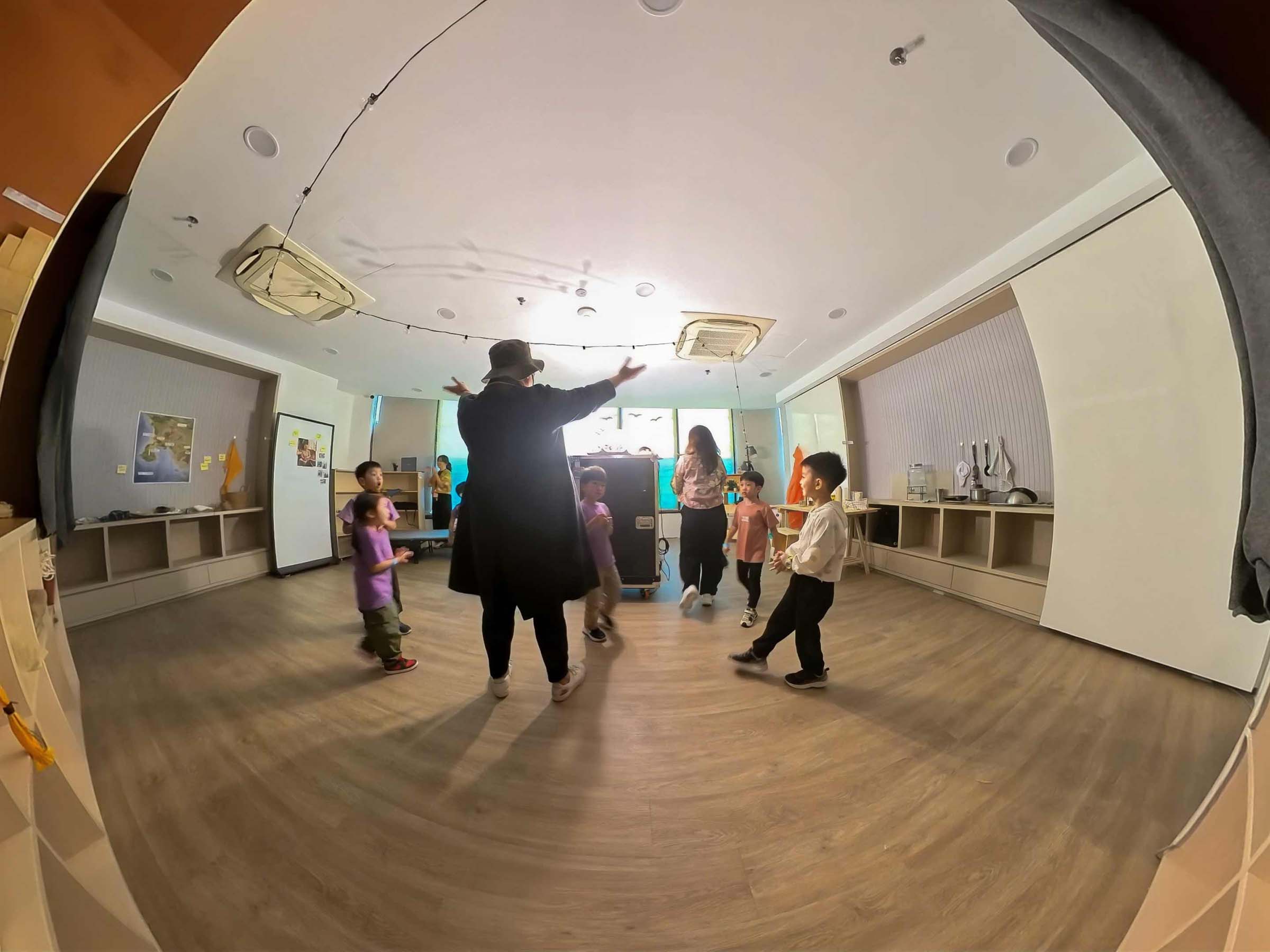
Ours had to bebuilt by hand, and the first days were wonderfully practical. Six sheets of sugar paper blacked out each window. Coloured bin bags became the sea. A kitchenette and a coffee table became Jonjon's home, an alcove became a place for clues, and a ledge became a perch for his bird.
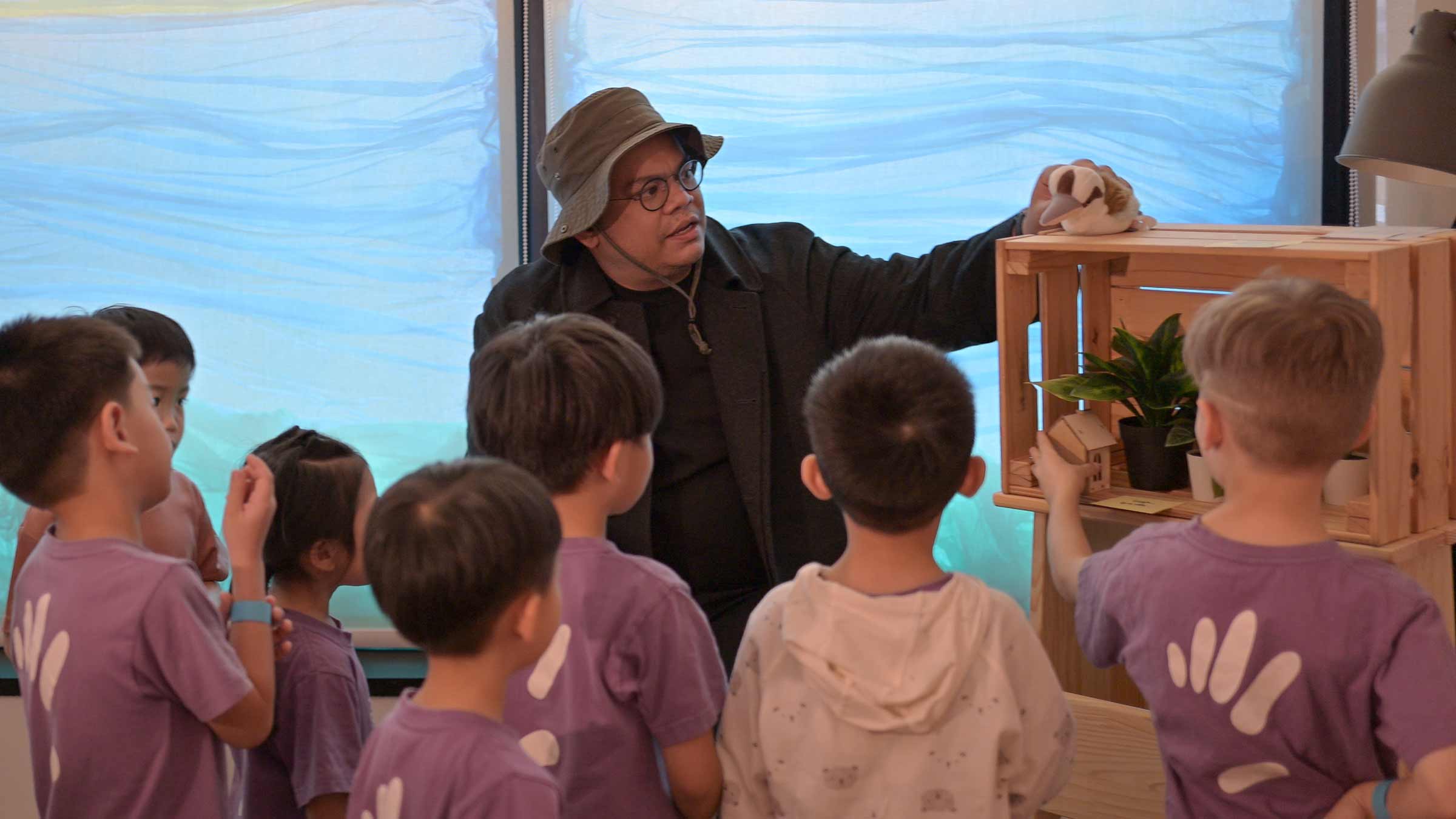
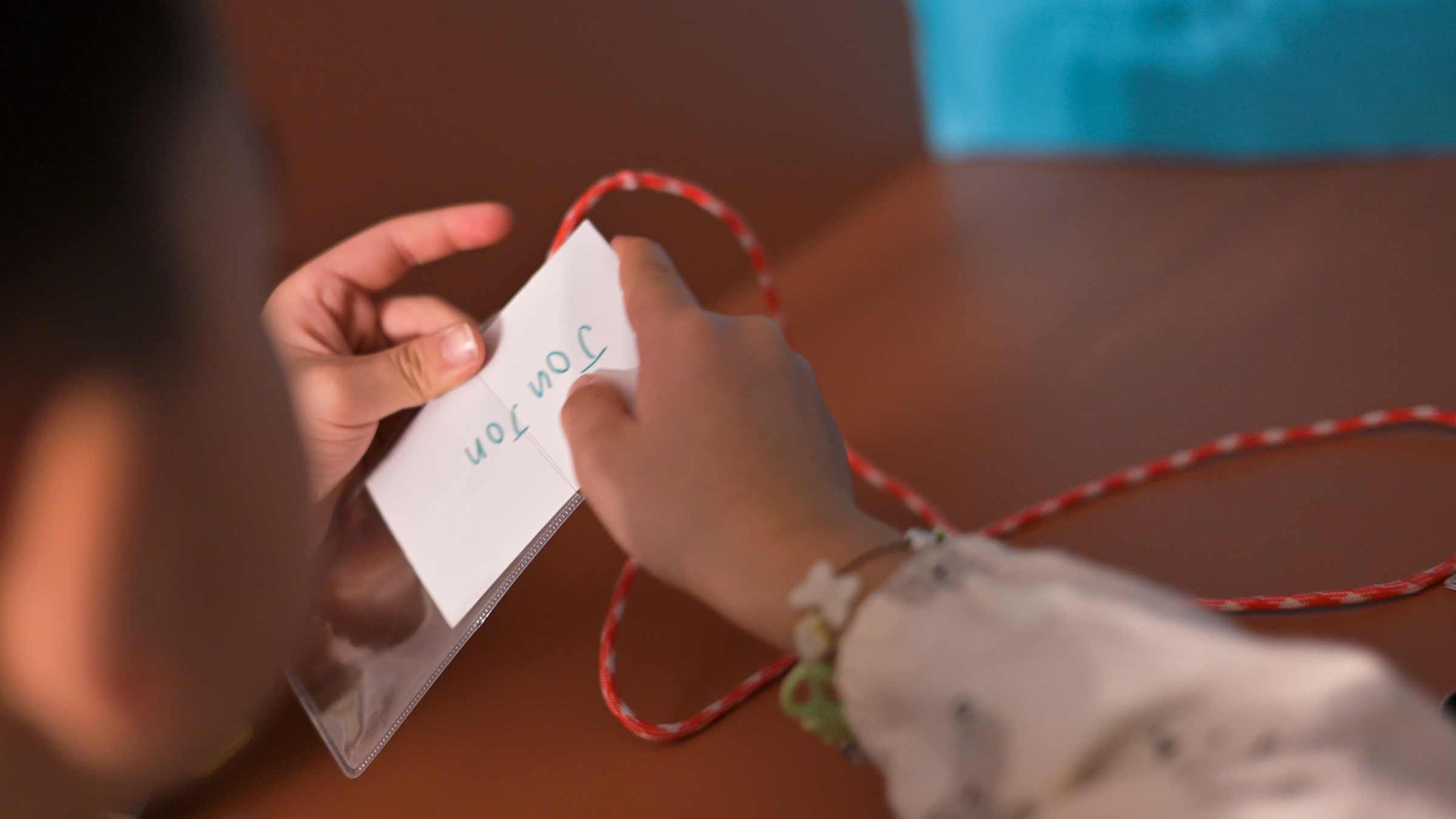
Then came the objects that make a world believable: his logbook, lanyard, handwritten notes, photographs, spectacles, a bird, and a guitalele. We settled on the name Jonjon, a Sabahan nickname (because Mr Ian who played the character was from Sabah), and carved it into wood so the children would have to uncover it for themselves.
Nothing was just decoration. Every detail had to give the children somewhere to look, something to wonder about, or a piece of his life to put back together.
And the room kept changing as we rehearsed. The script was rewritten after dry runs. Hints were added to each station. Sound was tested. A nautilus shell spent two days in the 3D printer. Even Jonjon evolved: we learned that whoever guided the children had to live inside the village, not narrate it from outside.
Then we let the adults in. There were oohs and aahs, and one comment stopped us:
"The room spoke for itself."
That was the test we'd been looking for. If the adults could feel the room telling them something, perhaps the children would too.
The rule nobody explained
Then the children arrived, and curiosity started carrying the story.
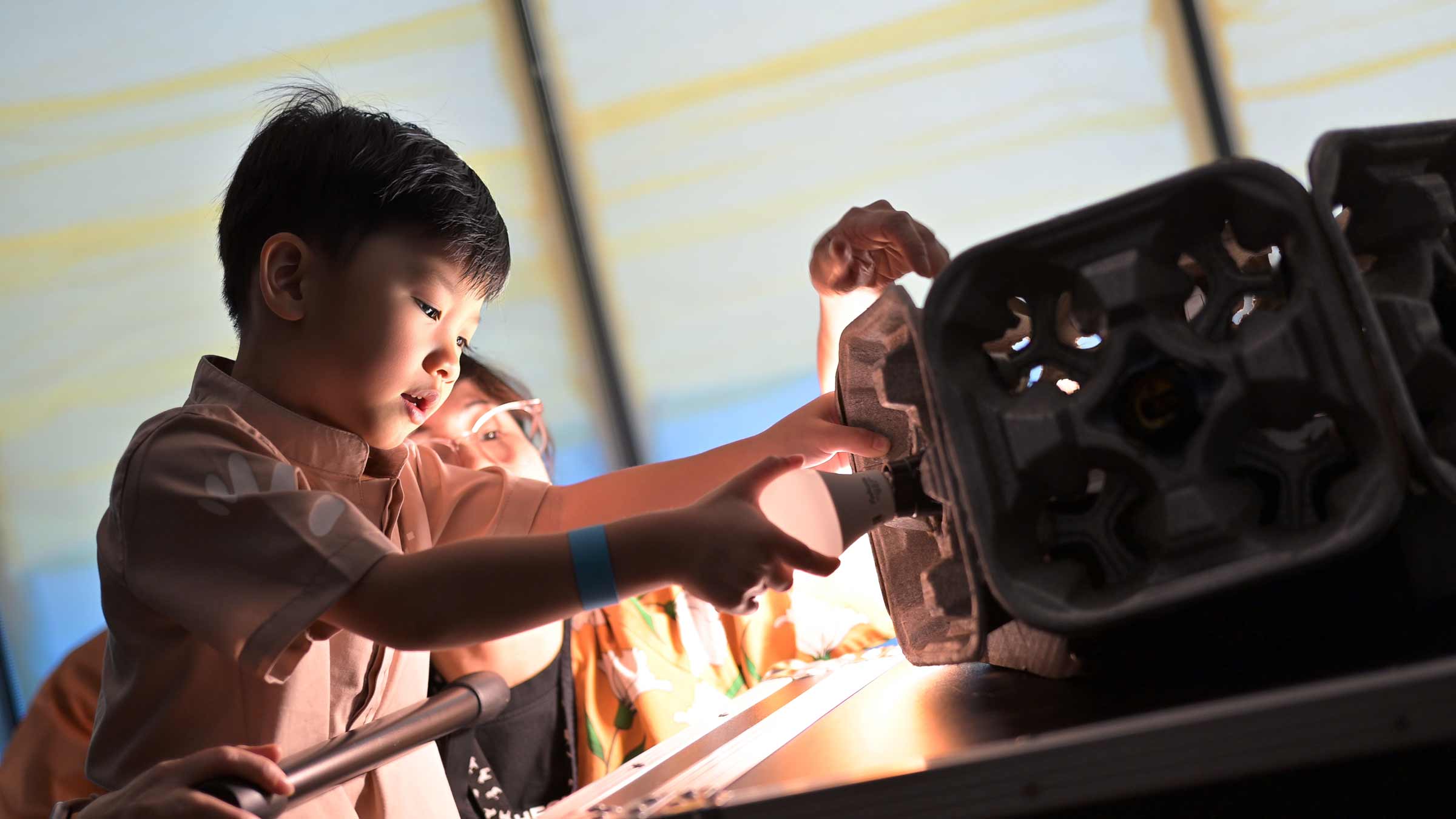
Every mystery they solved earned a real lightbulb. Every bulb made the dark room a little brighter, and brought back another piece of Jonjon's memory. We never told them how it worked. Partway through, one child stopped and said it out loud:
"Oh, I know! When we solve a mystery, a lightbulb appears!"
A small moment, and an important one. It mattered less that they were right than that they got there on their own. From then on, the children weren't just following the story. They were building its logic themselves.
Seven mysteries
The challenges were things a five-year-old could step straight into.
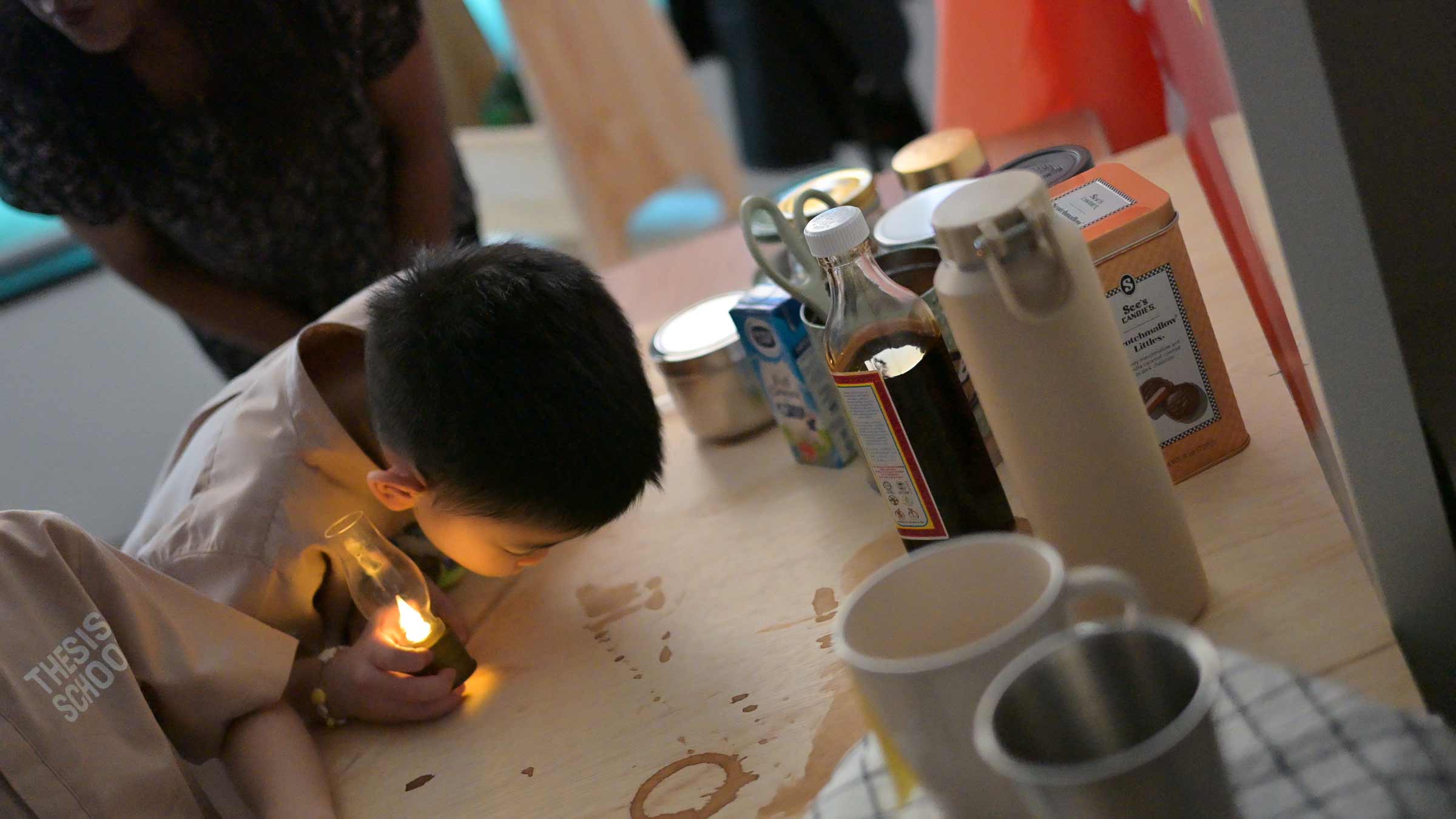
They held a seashell to their ears and heard the Mat Kool ice cream jingle, a clue to where Jonjon came from. They recreated his favourite drink from the stains on an old kitchen table, and added salt thinking it was sugar. Naturally, there were laughs.
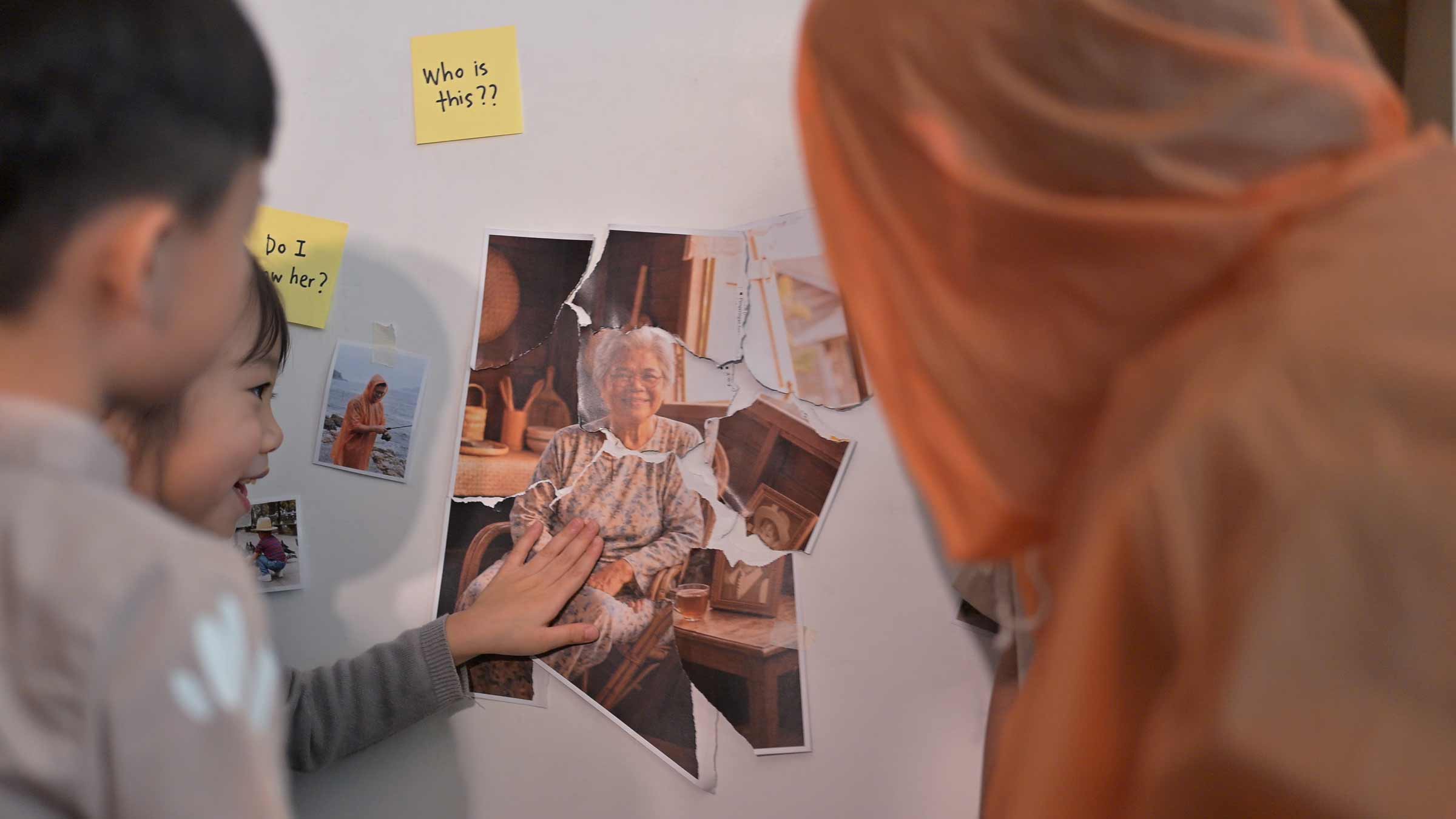
They pieced together a torn photograph until someone he knew he loved appeared. They used a map to untangle two memories that didn't agree. They fed a tired bird and followed the thread on its harness until Jonjon remembered its name: Patrick. They made a crayon rubbing of a carved beam until his forgotten name came through.
And when they found a guitalele, they sang You Are My Sunshine to help his memory along. Then something unplanned happened. The teacher playing Jonjon forgot the lyrics and made up his own. The children were mesmerised anyway, and the adults who knew were quietly tickled. That’s a memory the teachers intend to preserve for years to come.
None of this was presented as a lesson about memory. The children had a problem to solve, and someone needed them to solve it. That mattered to us, because the learning needed a reason to happen. The children didn't need to know everything before they had a go at something. There was a certain amount of beautifully curated chaos in the room.

Explanations no adult would give
The children were curious, sometimes frustrated, sometimes completely absorbed. They searched, argued, noticed, tested, and made connections.
After a conversation about remembering important things, one boy decided he would go home and ask his mother for her phone number, so he could learn it by heart. Another, trying to make sense of what had happened to Jonjon, offered this:
"You fell down and your memories came out!"
It's not the explanation an adult would give. But it was incredible – hilarious and ingenious in equal measure. The children were trying to make sense of what they could see, hear, and feel.
They came back
Here's how we knew the world had worked: on Day 2, the children couldn't wait to return.
They remembered details from the day before and wanted to help Jonjon again. One child even brought back a thread of the story they had started themselves: a pair of spectacles that needed returning to the keeper.
They had begun to carry the world with them, and the adults were no longer doing all the carrying. Children solved clues, climbed the ladder to screw in a lightbulb, explained how something had been made, and proudly proclaimed that the birds on the ceiling were only a projection.
Their competence did not always bear the resemblance of convention, but it had the face of compassion. Once they understood that Jonjon needed them, the room was theirs.
Who am I?
The question was never really whether the children could define dementia. It was whether they could understand something far more human:
That a person can lose pieces of their memory and still be a person worth knowing, helping, and caring for.
By the end, they had helped Jonjon find his name, his memories, his music, his home, and the people and creatures who mattered to him.
Then came the hard part: leaving. The wrist bands came off, slowly. Each child said their own name before stepping out of the story. Even Patrick the bird was de-roled. Having spent two days helping someone find his identity, the children needed a way back to their own.
We could not promise that Jonjon would remember. The children couldn't fix that. What they could do was help him while they were there. They remembered for him. They gave him back his name. They sang the words when he forgot them. They made him a card, so that even if the memory slipped away again, something would be left behind.
That's where "Who Am I?" became a much bigger question:
If someone forgets who they are, will we still remember them?
For two days, a group of five- and six-year-olds answered with their actions. They stayed curious. They kept helping. They cared. And for a little while, they became the keepers of someone else's memories.

What is Fusion?
At Thesis, Fusion is where learning becomes an immersive play experience. Every month, we turn whatever a class is studying into a world they live in for two days. Children learning about space find themselves on a mission gone wrong, supplies running low, the clock ticking. What they learned last week is suddenly what they need right now, and every decision has consequences. We want them good at what they do, and good to the people they do it with, and the best lesson for that is practice. When the story ends, we step out of it together and talk about what happened, what it felt like, and what it taught us. That is the moment learning becomes real. What they study is more than what they are told. They know it now, for real.